
August 2026
Marking Milestones: Doheny’s Past, Present, and the Leader Carrying It Forward
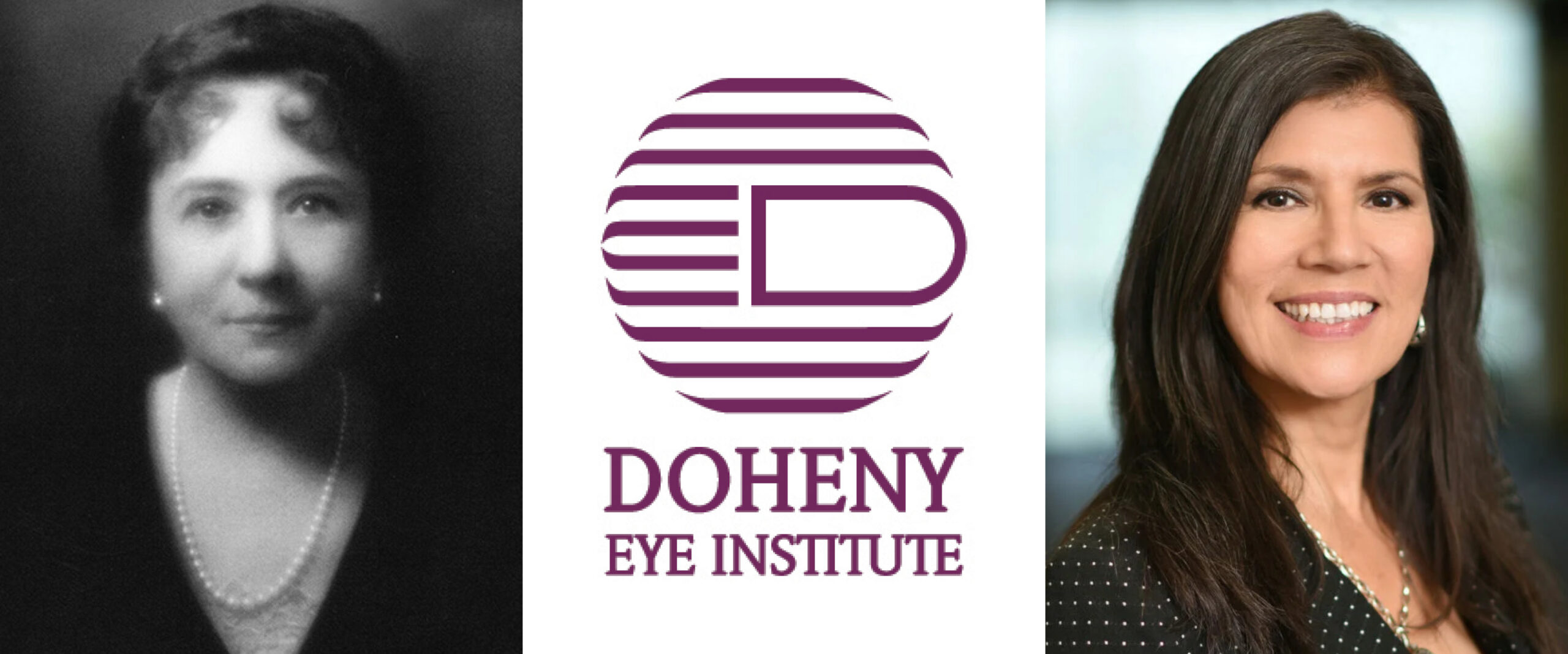
This month, we celebrate our roots and our future: what would have been our remarkable founder Carrie Estelle Doheny’s 151st birthday, the 79th anniversary of Doheny Eye Institute, and a more modern milestone, CEO Marissa Goldberg’s 35th work anniversary. What began in 1947 as a transformative gift from Mrs. Doheny to launch the first ophthalmology research institute on the West Coast has grown into a global leader in vision research, with Goldberg at the helm.
After suddenly losing her sight at age 69, Mrs. Doheny transformed a personal experience into a lasting mission. Her 1947 legacy gift established the Doheny Eye Foundation to further the conservation, improvement, and restoration of human eyesight.
Nearly eight decades later, that vision continues through research, education and the generations of scientists and ophthalmic leaders shaped by Doheny.
Today, Doheny scientists are advancing research across major causes of vision loss while developing new approaches in imaging, artificial intelligence and other technologies that may improve diagnosis and treatment.
“As a nonprofit institute, the combination of federal grants, private philanthropy, and industry-sponsored support is integral to advancing our innovative research,” says Marissa Goldberg, Doheny’s Chief Executive Officer. Thanks to the generous contributions of our community, Doheny scientists can tirelessly pursue our mission to preserve and restore human eyesight. When rising research costs outpace the support we receive each year, Doheny leans on Goldberg’s steady leadership and strategic investment in infrastructure, recruitment, and cutting-edge technology to help close that gap.
Doheny Eye Institute and UCLA Stein Eye Institute, UCLA Medical Center Again Rank Among Best Hospitals for Ophthalmology
For the seventh consecutive year, Doheny Eye Institute and UCLA Stein Eye Institute, UCLA Medical Center are ranked in the Top 5 Best Hospitals for Ophthalmology by U.S. News and World Report. The new 2025-2026 ranking, unveiled this week, placed Doheny and UCLA Stein at No. 5 in the country for ophthalmology out of nearly 5,000 institutions.
“Being ranked among the Top 5 ophthalmology institutions in the country reflects Doheny’s caliber of talent and visionary approach to research that continues to positively impact the field of ophthalmology,” said Deborah A. Ferrington, PhD, Chief Scientific Officer at Doheny Eye Institute.
“This honor reflects our unwavering commitment to continually pushing for new breakthroughs and understanding of the eye and the diseases that lead to vision loss and blindness,” added Marissa Goldberg, CEO of Doheny Eye Institute. “The support of our generous donors continues to make the innovative research we do possible every day, and we look forward to what we will achieve together.”
Doheny is proud to partner with UCLA Stein Eye Institute, and this recognition reinforces the transformational work of our scientists, thriving education programs, and commitment to achieving excellence in ophthalmology. As Dr. Anne Coleman, Chair of the UCLA Department of Ophthalmology and Director of UCLA Stein Eye Institute, states, “The best continue to get better, and we are better together, stronger than ever.”
What You Need to Know About Cataracts – One of the Leading Causes of Blindness
August is National Eye Exam Month, a great reminder that regular eye exams can help catch any potential issues that could impact your vision, including signs of cataracts.
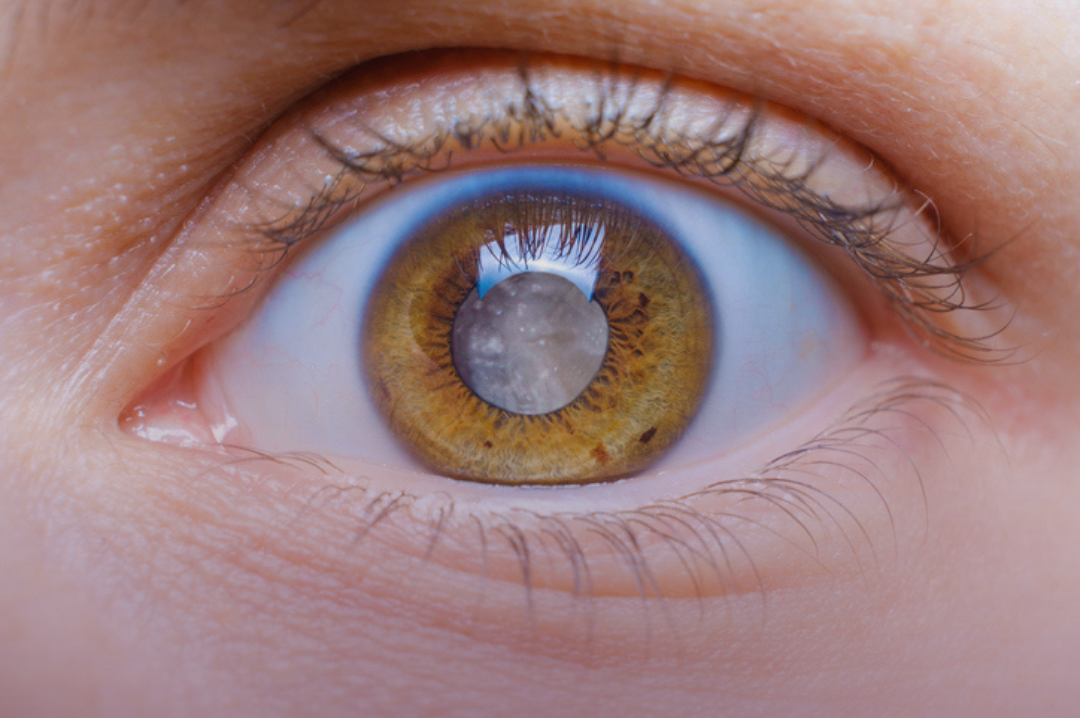
Cataracts are a leading cause of blindness worldwide, with more than 25.7 million Americans age 40 and older with cataracts. In fact, more than half of all Americans will have visually significant cataracts by age 80.
What Causes Cataracts
In most cases, cataracts stem from the natural aging process of the lens, often after age 50. The normal proteins in the eye lens break down and clump together, causing cloudiness. Over age 60, people usually begin to have some clouding of their lenses, though vision problems may not happen for several more years.
Risk Factors
While it may seem inevitable that aging will bring about cataracts, there are some risk factors to be aware of that could increase your chances of developing cataracts early and could lead to rapid progression:
- Intense heat or long-term exposure to UV rays from the sun
- Medical conditions such as diabetes and prior eye surgery or injuries
- Inflammation in the eye
- Hereditary influences
- Medications such as corticosteroids
- Smoking
Treatment
While cataracts cannot be prevented, research has shown that lifestyle and health behaviors influence when and how early a cataract starts to form. Choosing a healthy lifestyle can even slow the progression of cataracts.
If you develop cataracts, cataract surgery is the only effective treatment. Advances in cataract surgery technology have made it a comfortable and safe outpatient procedure with short recovery times.
Recent Advancements
Recent advancements in cataract treatment include:
- Advanced intraocular lenses (IOLs), which offer customized lenses for near, intermediate and distance vision, Toric lenses for astigmatism correction, and extended depth-of-focus and multifocal lenses for a wider range of vision.
- Light-adjustable lenses that can be adjusted after surgery to fine-tune vision correction.
- 3D Imaging and Guidance systems, like Optical Refractive Aberrometry (ORA), allowing surgeons to achieve precise IOL placement and alignment, reducing human error and optimizing surgical outcomes.
- New phacoemulsification units, the machines that help to liquify the cataract and vacuum it out, leading to faster recovery from surgery.
The Future of Cataract Treatment
Doheny is proud to be home to some of the leading experts in cataracts who are helping forge a new path forward in cataract treatment. At places like Doheny and other leading institutions, treatments like the following are under review:
- Research into chelation-based treatments for early cataracts for improvements in contrast sensitivity and lens clarity
- Lens refilling techniques to restore clarity to the natural lens
- The potential for drug therapies to reverse cataracts
- The integration of robotics and artificial intelligence in cataract surgery is also being explored to enhance surgical precision, efficiency, and safety
Cataracts affect millions of people, and early detection and treatment are critical to help preserve and restore vision. If you haven’t scheduled your annual eye exam, or if you think you may be exhibiting symptoms of cataracts or other eye issues, be sure to visit an ophthalmologist for a thorough exam.
If you’re interested in an appointment with one of the experts at Doheny Eye Center UCLA, we encourage you to book one through this link. The team has offices conveniently located in Arcadia, Orange County, and right here on the Doheny Eye Institute campus in Pasadena.
Save the Dates for the Upcoming Glaucoma Symposium and Donor Appreciation Reception
Be sure to mark your calendar for two important upcoming Doheny events: the 8th Annual Doheny-UCLA Glaucoma Symposium on September 26 and the Annual Donor Appreciation Reception on October 29.
September 26
8th Annual Doheny-UCLA Glaucoma Symposium
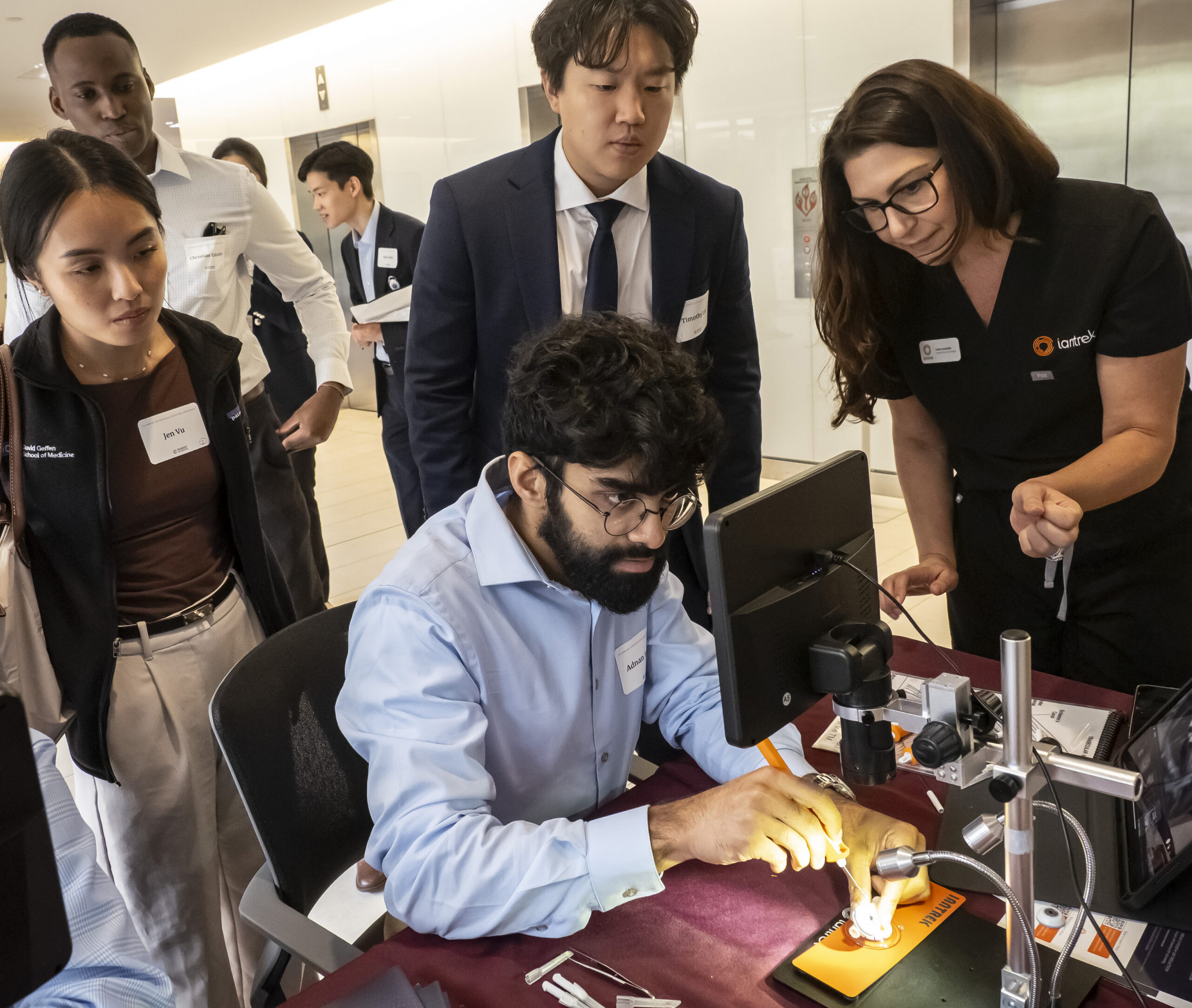
Join us on September 26 for the 8th Annual Doheny-UCLA Glaucoma Symposium, bringing together leading glaucoma specialists, cataract surgeons, residents, fellows, and comprehensive ophthalmologists for a full day of cutting-edge education focused on emerging technologies, surgical innovation, and real-world clinical decision-making.
This year’s program highlights advances in home IOP monitoring, minimally invasive glaucoma surgery (MIGS), minimally invasive bleb surgery (MIBS), traditional glaucoma surgeries, sustained-release drug delivery, complex glaucoma management, surgical complication avoidance, and next-generation treatment strategies. Through expert lectures, case-based discussions, and interactive wet labs, attendees gain practical experience with the latest devices and technologies shaping glaucoma care.
This CME program will be held at the Doheny campus.
October 29
Annual Donor Appreciation Reception
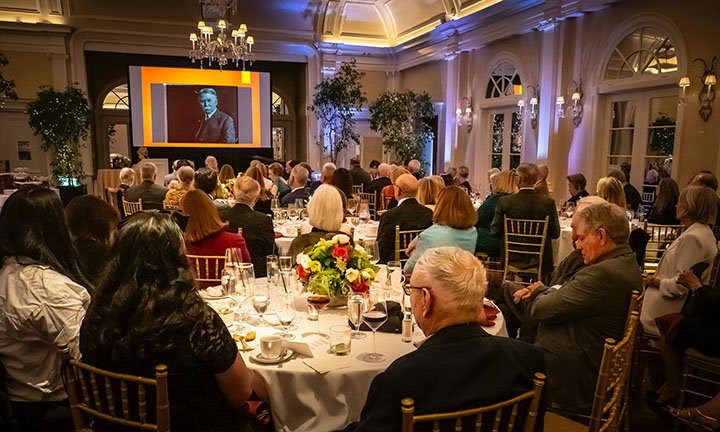
Each year, we are honored to show our gratitude to Doheny’s generous supporters at the Annual Donor Appreciation Reception. Mark your calendar for the evening of Thursday, October 29, and be on the lookout for the official invitation to arrive by mail in the coming weeks. We hope to see you there!
Latest News
Summer 2026 InSight Newsletter: The Summer 2026 InSight Newsletter hit mailboxes a few weeks ago. If you haven’t received your copy yet, you can check it out on our website.


Make a Will Month: Did you know that August is National Make a Will Month? Making a planned gift to Doheny is easier than you might think, and it can also provide financial benefits to you and your family by reducing your tax burden and creating lifelong income. Some of the ways you can support the work of Doheny include:
- Designate a portion of your estate to Doheny through your will or estate.
- Gifting an asset, such as securities, business interests, or real estate
- Making a gift directly from an IRA – up to $111,000 for anyone 70 ½ years old or older
- Making grants from a donor advised fund
- Create a Charitable Remainder Trust or Charitable Gift Annuity to generate tax-free income
- Designate Doheny as a beneficiary to a retirement, brokerage account, or life insurance policy
Our experienced staff will work with you to explore how a planned gift will benefit you while helping you achieve your philanthropic goals.
Visit our Planned Giving website to learn more or contact Heidi Simpson-Sandoval via phone at or by email at to discuss further.
Your support powers discovery. Philanthropy helps Doheny scientists pursue new ideas, acquire essential technology, and advance research that can change how vision loss is understood and treated. Learn how you can make a difference.