
June 2026
Philanthropic Giving Powers Future Innovation

As a leading vision research institute, Doheny conducts innovative studies with the potential to transform lives. Through the generosity of our supporters, Doheny researchers and clinician-scientists remain at the forefront of global scientific discovery.
Philanthropic giving is a critical source of support for a nonprofit organization like Doheny as we continue pursuing transformative research. While national funding and grants have traditionally been an important source of support for our work, opportunities for research institutions have declined significantly in recent years due to shrinking budgets and reallocations at the national level. This makes the generosity of our donors and philanthropic supporters vital to advancing the innovative vision research conducted at Doheny.
We are pleased to announce two generous gifts to support ongoing research at Doheny.
First, Doheny was selected to receive a grant from the Pasadena Community Foundation, an organization that supports local nonprofit organizations and initiatives that strengthen the Greater Pasadena community. This capital grant will provide $10,000 toward the acquisition of cutting-edge equipment for our laboratories.
We are also excited to share that, as a result of their annual spring fundraising gala, The Luminaires Founders, a philanthropic group that supports Doheny, have made their largest gift ever, totaling $292,500. This unrestricted gift will enable Doheny to directly advance the innovative research and discoveries that are transforming the future of eye health.
With technology constantly advancing and the costs of conducting breakthrough research continuing to rise, the ongoing support of our community remains as essential as ever. We encourage you to visit www.doheny.org/give-now to learn how you can support our mission. We also welcome you to contact us at to learn more about Doheny’s work or to schedule a visit to our campus and see our innovative research facilities firsthand.
Doheny Experts Advance Understanding of Age-Related Macular Degeneration
Genetic discoveries over the past two decades have led researchers to believe that what we know as age-related macular degeneration (AMD) may actually encompass several distinct conditions rather than a single disease. At Doheny Eye Institute, Deborah Ferrington, PhD, Sreekumar Gangadharan, PhD, and Yuhua Zhang, PhD, are working to advance this understanding through collaborative research focused on AMD.
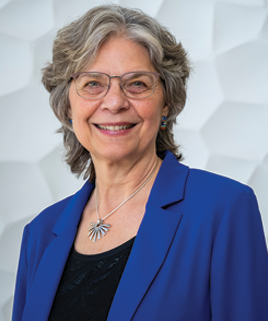
Dr. Ferrington’s Research into Genetic Mutation
One area of Dr. Ferrington’s current research examines the effects of a genetic mutation in the Complement Factor H (CFH) gene on the development of dry age-related macular degeneration (AMD), a condition for which treatment options remain limited.
CFH helps regulate the immune system by acting as a brake that reduces immune responses. An overactive CFH, or too much braking, may increase susceptibility to microbial infections. Conversely, an underactive CFH allows immune cells to attack healthy tissue, which can lead to autoimmune disease. As a result, mutations in the CFH gene are often associated with disease. In 2005, several independent research groups identified a CFH mutation present in nearly one-third of people of European descent as a risk factor for AMD. This mutation makes CFH a less effective brake, resulting in retinal cell damage caused by an overactive immune response.
Because the retinal pigment epithelium (RPE) has been identified as a key site where AMD develops, Dr. Ferrington’s laboratory uses RPE cells generated from induced pluripotent stem cells to study why individuals with the CFH mutation are more susceptible to the disease. One of the lab’s major findings is that mitochondria, often referred to as the “powerhouses” of cells, function less efficiently in RPE cells containing the CFH mutation. These findings suggest that therapies designed to improve mitochondrial function may hold promise as a treatment for AMD.

Dr. Gangadharan’s Molecular Research
Dr. Gangadharan’s research focuses on the molecular mechanisms underlying retinal pigment epithelium (RPE) degeneration, an essential first step toward identifying therapeutic targets to prevent retinal fibrosis, a serious complication of wet age-related macular degeneration (AMD).
Wet AMD, the less common form of the disease, results from the uncontrolled growth of abnormal blood vessels beneath the retina. Dr. Gangadharan is studying the development of fibrosis, which occurs when scar tissue forms under the retina. Although approximately 60% of patients respond positively to anti-VEGF treatments, fibrosis, which can ultimately lead to severe vision loss, develops in 40% to 50% of patients within 10 years of beginning treatment.
Dr. Gangadharan’s current studies are examining whether mitochondrial dysfunction, similar to that observed in association with the CFH mutation, contributes to the development of fibrosis. His team is also investigating whether naturally occurring peptides produced by mitochondria may help reduce or prevent this condition.
Dr. Zhang’s Imaging Breakthroughs
Dr. Zhang’s work in imaging is internationally recognized because his breakthroughs have gone beyond the static images made possible by optical coherence tomography (OCT) in the 1990s. His innovations have enabled researchers to study the living eye in action with unprecedented resolution. Through advances in adaptive optics, scientists and clinicians can now visualize the approximately 126 million photoreceptors, ganglion cells, and even individual blood cells moving through the retinal vasculature.
Some of Dr. Zhang’s recent observations in the living eye are consistent with findings from the Ferrington and Gangadharan laboratories. For example, researchers have identified imaging patterns in the retina that may be associated with mitochondrial dysfunction in the retinal pigment epithelium (RPE) of patients with age-related macular degeneration (AMD). Ongoing collaboration among Dr. Zhang, Dr. Ferrington, and Dr. Gangadharan is helping to validate and further refine these findings.

Looking to the Future
Dr. Ferrington explains, “Researchers are exploring at least five or six distinct genetic pathways leading to what we define clinically as AMD. We need to understand these differences at a precise cellular level if we are to develop the most effective treatments. Through research at the genetic and cellular levels, we’re breaking new ground and moving toward the future.”
You can read more about this topic in the upcoming print edition of Doheny InSight, which should arrive in your mailbox in the coming weeks.
Dr. Sadda In The News

On Saturday, June 13, SriniVas Sadda, MD, FARVO, was a speaker at the USC Department of Ophthalmology’s 50th Annual Symposium at the Keck School of Medicine of USC.
Dr. Sadda presented on “Pathophysiology of Age-Related Macular Degeneration Revealed by High-Resolution Imaging.”
This continuing medical education symposium provides attendees with updates on the latest ophthalmic best practices, recently approved therapies for ophthalmic diseases, and emerging treatments currently in the development pipeline.
We are pleased to share that Dr. SriniVas R. Sadda has been appointed Chair of the Department of Ophthalmology at Duke University School of Medicine, effective November 10, 2026. Duke Health, consistently ranked among the nation’s premier ophthalmology programs, cited Dr. Sadda’s extraordinary accomplishments at Doheny as instrumental to his selection.
We congratulate Dr. Sadda on this well-deserved appointment and thank him for his many contributions to Doheny Eye Institute. We wish him every success in this exciting new chapter as he joins the distinguished ranks of Doheny faculty and alumni who have gone on to lead ophthalmology departments and programs around the world. While Dr. Sadda will be greatly missed, we are immensely proud of his accomplishments and look forward to following his continued impact on the field of ophthalmology.
Stay tuned for a special feature of InSight, our biannual newsletter, honoring Dr. Sadda’s enduring impact on Doheny and the countless lives he has touched through his leadership, mentorship, and scientific contributions.
Philanthropy helps fund essential equipment, recruit and retain world-class scientists, and create the kind of environment where innovation thrives. A gift to Doheny Eye Institute is a shared commitment in the fight against vision loss. There is still time to give before our fiscal year ends on June 30.